
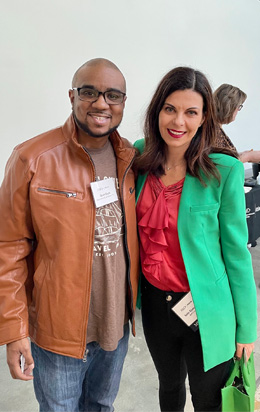
For more than ten years, the Atlanta Chapter of the American Marketing Association has been the proud host of a mentorship program. With a mission to cultivate enduring professional connections, enhance networking opportunities within AMA, and deliver invaluable career advancement for mentors and mentees, this program welcomes professionals from diverse backgrounds and varying experience levels. […]

Embarking on the journey of seeking a new opportunity in the marketing field requires a strategic approach and a lot of patience to land your ideal role. Here are seven things that you should know before embarking on your search for that next opportunity:
Craft Your Resume to Highlight Keywords
The widespread use of AI in various sectors is evident, particularly in aiding the hiring process. AI assists by scanning resumes for specific keywords and streamlining the selection process for hiring managers and Talent Acquisition teams. This situation offers both an advantageous prospect and a potential obstacle for individuals seeking employment. The advantage lies in strategically incorporating relevant keywords and structuring your resume effectively. Although a human ultimately reviews your resume, the objective is to ensure it gets to the top of the “”stack.””
If you’re in a more creative role, the benefit is that humans will review your portfolio. Use black or white backgrounds for creative portfolios, so your work pops. Hiring managers won’t want to sift through a cluttered portfolio to find your gems—you need to lay it out so it’s easy to see your talents and past work.
Lean Into Your “Weaknesses”
The days of trying to spin your weaknesses into strengths or some kind of humble brag (“”You know, I just work too hard sometimes) are over. Most hiring teams (and professional recruiters) will see right through it. Instead, try a new approach: Lean into the things you’re not good at and address them head-on.
In Adam Grant’s book Think, he shares a story about a woman who wanted a Product Manager job but wasn’t remotely qualified for it based on the job description. Instead of first detailing her strengths that would transfer in the space (which she had many of), she talked about how she wasn’t the ideal candidate for the job but why they should consider her anyway. Describing her background and experience and how someone who didn’t necessarily match all of the qualifications would benefit the team worked out: She got the job.
The lesson: Will you be 100% qualified for every role you want? No. Should you still apply? Absolutely.
Never Assume (and get it in writing!)
No one likes making decisions under immense pressure, so when it comes to looking for a new job, if you have the option to look while you’re still employed, it’s always a better idea to do so if you can. Regardless of the circumstances, getting as much information as possible when looking at new jobs is critical to ensure you’re not making a decision you’ll regret. Assumptions are not your friend in the search process.
Interviewing can be a blur, especially when looking for your next move and under pressure from a time standpoint. Take notes, but get everything in writing. Did they say you could work fully remote? Confirm it! Did they tell you the salary was negotiable? That there’s a bonus structure? Get it all in writing. It’s never a fun time to get excited about an offer only to find out that they’re coming in below your asking, won’t allow you to work remotely, etc. And while we’re on the topic…
Ask for What You Want (and know your worth)
Be direct about what you want. Giving super broad salary ranges or saying you can make something work that will make your stress levels soar (like going into an office for five days with a horrendous commute) won’t serve you well.
Do research ahead of time. Talk to people in the same job in different industries. Run data. Ask recruiters for their insight.
Also, if you’re working with a Recruiter, ensure you know what you need and your career objectives for your next role. Clear expectations prevent disappointment on all fronts and prevent burned bridges in the future.
Never Quit on Your Worst Day
This is age-old advice that holds (in most cases). It’s less about a literal “”worst day”” and more about checking into what makes you dislike your job or feel it’s time to move on. It’s important to reflect and work to understand what you’re looking for in your next opportunity before you jump at the next thing to get out of your present job. Making a list, talking to people who have left your company, and speaking with your networks and Recruiters are all great ways to discuss what’s missing in your current role and verbalize what you need to clarify your thoughts and ensure you’re ready to move on.
Leverage Your Networks
Many people find jobs through networking. Much anecdotal evidence supports that networking is a powerful way to find your next role. But where do you start?
- Do a quick inventory: search your LinkedIn for former coworkers and contacts from college or grad programs. Make a list of everyone you’d feel comfortable reaching out to. Ask friends if they’ve heard of openings in your field. Take coffee meetings for exploratory conversations and proactive discussions before you ever need a job. Help other people when you can, and they will likely do their best to return the favor in the future.
- Make yourself easy to find. Ensure you have the Open to Work banner on your LinkedIn profile if you are out of work or have visibility turned on for Recruiters to see you’re open to a new opportunity if you’re still working. Many recruiters utilize these indicators on LinkedIn, so you will get noticed if you have them set accordingly.
- Industry-specific networking groups (like AMA Atlanta!) are also great starting places. There are often free or low-cost events you can attend where the sole purpose is to meet new people and forge new relationships. The AMA Atlanta Around Town events are excellent, casual ways to network with fellow marketers. Take advantage of those opportunities, and immediately follow up with those you meet via LinkedIn and email.
Consider Utilizing a Specialized Recruiter in Your Job Search
Recruiters have a direct line to the hiring managers (in most cases) and insight into what they’re looking for. They also can offer a different perspective and represent the candidate better than a resume or portfolio of work can.
For example, we supported an e-commerce retailer searching for a new E-Commerce Marketing Manager. We presented several candidates, and the client said they did not want to interview one of them (who we will call Joe) due to their experience not aligning with their vision for the role. We pushed back, and the client said they’d give them a chance. After the interview process, the front-runner was clear: Joe. Not only did Joe get the job, but he was offered above asking.
The moral of the story? Recruiters are advocates. They are there to bridge the gap between the talent needed and a company’s overall vision for the role. They have a unique perspective that can help you get your resume to the top of the stack and challenge hiring managers with inaccurate assumptions.
The search for your next opportunity can feel like a job in itself. Don’t be discouraged. You are traveling a path that many have traveled; leverage the wisdom of those you know who have recently gone through the search process. You’ll be surprised how many people would love to share their advice on this topic – you need to ask!
———-
About the Author:
| Ally Rakoczy Pridgen Practice Lead at TEKsystems for Digital Marketing and Creative |
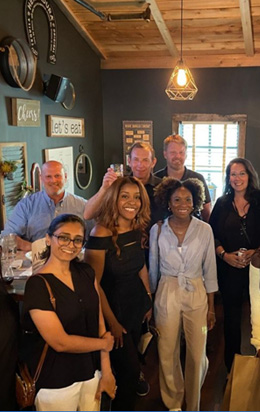
Walking into a large room full of marketers can be intimidating for some – especially if you like to build meaningful connections and small talk isn’t your jam. If you want to meet other marketers in the Metro area, AMA Around Town gatherings are a great way to connect informally with other marketers who live and work in your area of town.
What is “AMA Around Town?”
Each month, the chapter hosts several gatherings across the metro area – Intown, South Atlanta, Alpharetta, Perimeter, and Duluth (launching soon) for current and prospective chapter members to network. Events occur at a local restaurant or brewery, with no formal agenda or speaker. Attendance varies, but typically, these are smaller gatherings of 10-20 people, allowing participants to get to know others quickly and easily. Events are free (you don’t even have to be an AMA member), so it’s a no-brainer!
Why should I come to an “AMA Around Town?”
Members and non-members love these events because they allow them to connect with others about everything from work initiatives to industry trends, support for career challenges, hobbies, and current events. Are you new to the marketing community in Atlanta? Are you looking for new marketing clients or your next job opportunity? Do you just like hanging out with cool people and having fun conversations? Then you should check out an Around Town event near you! (Did we mention they are free?)
Can’t I network at your professional development events?
Yes, of course! Our monthly professional development events are also a great way to connect and meet others. But, an Around Town event might be the perfect opportunity if you are looking for something more casual and laid back, with no fee attached (except for whatever you purchase to eat or drink).
Life is too busy to go to an event. What am I going to get from it?
We get it! So many of us are back to doing everything in these post-COVID days. But, after years of being stuck behind screens, interacting in person can be a nice change of pace. You never know who you will meet or how you might have an opportunity to help a fellow marketer. The Around Town events are about a casual, fun way to connect.
Take it from Karen Phillips, our chapter’s VP of Membership: “Connection is key. Marketers like to connect with other marketers, and people come to these events for different reasons. You never know when you may find someone who can be a resource, share a job or client opportunity, or even be a new friend who shares a hobby. It’s about relationships.”
If you still need some convincing, check out what Candi Garrett – Creative Executive, BrandView Studios had to say about Around Town:
“I was invited to AMA Around Town by a friend and wasn’t sure what I was getting into as I registered at the last minute. To my surprise, I entered a room full of experienced marketing professionals. From engaging conversations to meaningful connections, I’ll definitely be back for more.”
——
About the Author:
Kristina Gross
Senior Director, Executive and External Communications at TrueBlue, Inc.
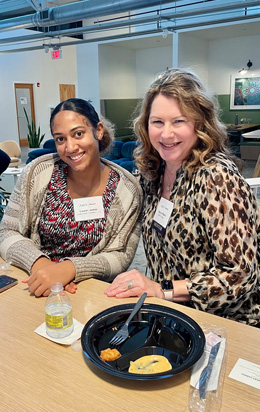
In the ever-changing world of marketing, mentorship plays a vital role in shaping the industry’s future leaders. It goes beyond simply sharing wisdom; it fosters a strong relationship that builds personal and professional growth. In this blog, we will highlight the perspectives of both a mentee and a mentor, sharing tips for a successful meeting and the elements that contribute to building a lasting mentor-mentee relationship.
From the Mentee’s Perspective: Preparing for the Meeting
- Establish Clear Objectives: The initial step to prepare for a mentorship meeting involves establishing clear and attainable objectives. As a mentee, take the time to reflect on what you hope to achieve from the session. Are you in search of guidance on a specific marketing strategy, seeking career advice, or looking for feedback on a project? You can steer the conversation towards a focused and productive outcome by defining your goals.
- Get Ready: Before the meeting, take some time to dive into your mentor’s background, achievements, and areas of expertise. By gaining insight into their journey, you show genuine interest and have valuable context to enhance your questions. Mentors appreciate mentees who come well-prepared as it demonstrates your initiative and respect for their time and expertise.
- Embrace Openness and Receptivity: Approach the meeting with a curious and open mindset, ready to absorb new knowledge and perspectives. Embrace feedback, even if it may be challenging to hear. Constructive criticism plays a vital role in nurturing both personal and professional growth. Engaging in meaningful conversations, asking thought-provoking questions, and listening attentively to your mentor’s valuable insights will pay dividends. Remember, mentorship is a collaborative journey where both parties learn from each other’s unique perspectives.
From the Mentor’s Perspective: Guiding the Mentee
- Foster a Supportive Environment: A great mentor understands the importance of creating a safe and welcoming space where the mentee feels comfortable sharing their challenges and aspirations. Encourage open communication and create an atmosphere of trust and understanding. Actively listen and empathize, fully grasping their perspective before offering guidance.
- Provide Constructive Feedback: Honest, constructive feedback is incredibly valuable for a mentee’s growth. While praise boosts confidence, well-structured criticism is what drives improvement. As a mentor, it’s crucial to deliver feedback in a positive and supportive manner, focusing on specific areas for development and offering actionable suggestions. By balancing praise with areas for improvement, you help mentees understand their strengths while identifying growth opportunities.
- Establish Realistic Expectations: Managing expectations in any mentorship relationship is essential. As a mentor, help guide your mentee by setting realistic and achievable goals. Break down larger objectives into manageable tasks, providing a clear roadmap for their journey. Encourage patience and perseverance, as success often comes through gradual progress. By setting attainable milestones, you inspire confidence and demonstrate your unwavering commitment to their growth and development.
Building a Lasting Relationship: A Mutual Endeavor
In marketing, mentorship goes beyond a professional partnership; it’s a relationship formed on mutual respect and shared aspirations. For both parties, building a solid relationship requires ongoing effort and dedication.
Mentees, remember to ask for guidance and keep your mentor updated on your progress. Show you value their time and insights and how their advice has influenced your decisions and projects. A heartfelt thank-you note can truly nurture this connection.
Mentors, make sure to stay connected with your mentees’ journeys. Regularly checking in and following up demonstrates your sincere interest in their growth. Celebrate their accomplishments, no matter how small, and champion them through the challenges. Your support can be a foundation in their professional lives.
The mentorship journey is an exciting and mutually beneficial experience. By approaching meetings with clear objectives, active engagement, and genuine respect, both mentors and mentees contribute to a strong partnership. Remember, mentorship is not just about sharing knowledge; it’s about shaping the industry’s future, one meaningful connection at a time. So whether you’re a seasoned marketing professional or just starting your career, embrace the mentorship experience—a partnership that benefits everyone involved.
Author: Christine Elliott
Director, Sales & Marketing
TaxCredible

ATLANTA, March 31, 2023 – The 2023 Atlanta Marketer of the Year (AMY) Awards were presented at the 66th annual AMY Awards held on March 29, 2023, before a sold-out crowd at the Atlanta History Museum. Twenty-four outstanding marketers were acknowledged with the coveted AMY Awards Red Pencil, which represents the dedication and commitment it takes to produce award-winning creative.
Additionally, three individuals were awarded with the distinguished recognition of Marketer for Good, Volunteer of the Year and the AMA Lifetime Achievement Award. You can find a full list of our 2023 award winners below.
LIFETIME ACHIEVEMENT AWARD
Moira Vetter, Founder & CEO, Modo Modo Agency
MARKETER FOR GOOD
Jo Ann Herold, Founder & Strategist, Herold Growth Consulting
VOLUNTEER OF THE YEAR
Robert Carnes, Marketing Manager, GreenMellen
ATLANTA MARKETER OF THE YEAR
Kris Delaney, VP of Marketing, Cobb Electric Membership Corporation (EMC)
ATLANTA RISING STAR AWARD
Tiffany Ujjin, Account Strategist, ModusMark
JANA FERGUSON MENTORSHIP AWARD: MENTOR
Joe Koufman, Found & CEO, Setup
JANA FERGUSON MENTORSHIP AWARD: MENTEE
Andre Medina, Program Manager, CX Strategy & Portfolio Management, Delta Air Lines
E-COMMERCE
CHOA: Heart Swap Foundation – The Partnership
BROADCAST
IHG Hotels & Resorts – Hotel Indigo: “So Much More to Discover” – Hothouse Inc.
EMAIL MARKETING
Driving Clicks for Parentseducation.com – Fire Bee
HEALTHCARE
Helping Georgia’s Medicaid Members Stay Informed & Stay Covered – Jackson Spalding
EVENT (B2B, B2C or NON-PROFIT)
ARIUM Presents Sounds of Summer 2022 – ARIUM
INFLUENCER
Living Real Change – Piedmont Healthcare
INTEGRATED CAMPAIGN: BUSINESS-TO-BUSINESS
Integrated B2B Campaign to Establish & Amplify RentPath’s Complete Company Relaunch as “Rent.” – Rent.
INTEGRATED CAMPAIGN: BUSINESS-TO-CONSUMER
Leveraging Audience Insights for Big “Moves” to Gas South – Nebo
INTEGRATED CAMPAIGN: NON-PROFIT
Goodwill of North Georgia: Go Big on Good – Brunner
MULTICULTURAL ADVERTISING (B2B OR B2C)
Atlanta Housing Supplier, Diversity, and Inclusion Marketing – Atlanta Housing
OUT-OF-HOME (OOH)
IHG Hotels & Resorts: “Travel Like You Mean It” – Hothouse Inc.
PAID SEARCH/PPC
Saying “I Do” to Swan Coach House – Fire Bee
PRINT
Booster Impact Report 2021-2022 – Booster Enterprises, Inc.
Programmatic
First Watch Purple Haze Media Campaign – Vert
SEO
Atech Logistics SEO – GreenMellen
USE OF INNOVATION
RentSocial: TikTok Awareness Advertising for Multi & Single Family Real Estate – Rent.
USE OF PARTNERSHIPS
Alge Crumpler: Remaking a Pro – Emory Healthcare
SOCIAL MEDIA CAMPAIGN
First Watch Purple Haze Creator Campaign – Vert
VISUAL BRANDING/IDENTITY
State of Change – Piedmont Healthcare
WEBSITE/WEB CREATIVE
Driving Brand + Product Awareness with SnapAttack’s New Website – ModusMark
CONTACT:
Evan Spessard
evan.spessard@newellco.com
About AMA Atlanta
AMA Atlanta is the go-to source for marketing knowledge, events, resources and networking in Atlanta. We are the largest marketing organization in the city and one of the largest AMA chapters nationwide. That means AMA Atlanta members have access not only to an incredible amount of local talent, but also to the international reach of the entire AMA community.
Our members include professionals across the spectrum of the discipline: research, non-profit, public relations, advertising, branding, direct marketing, interactive, creative, multicultural and so much more.
For more information on AMA Atlanta, visit us at ama-atlanta.com.
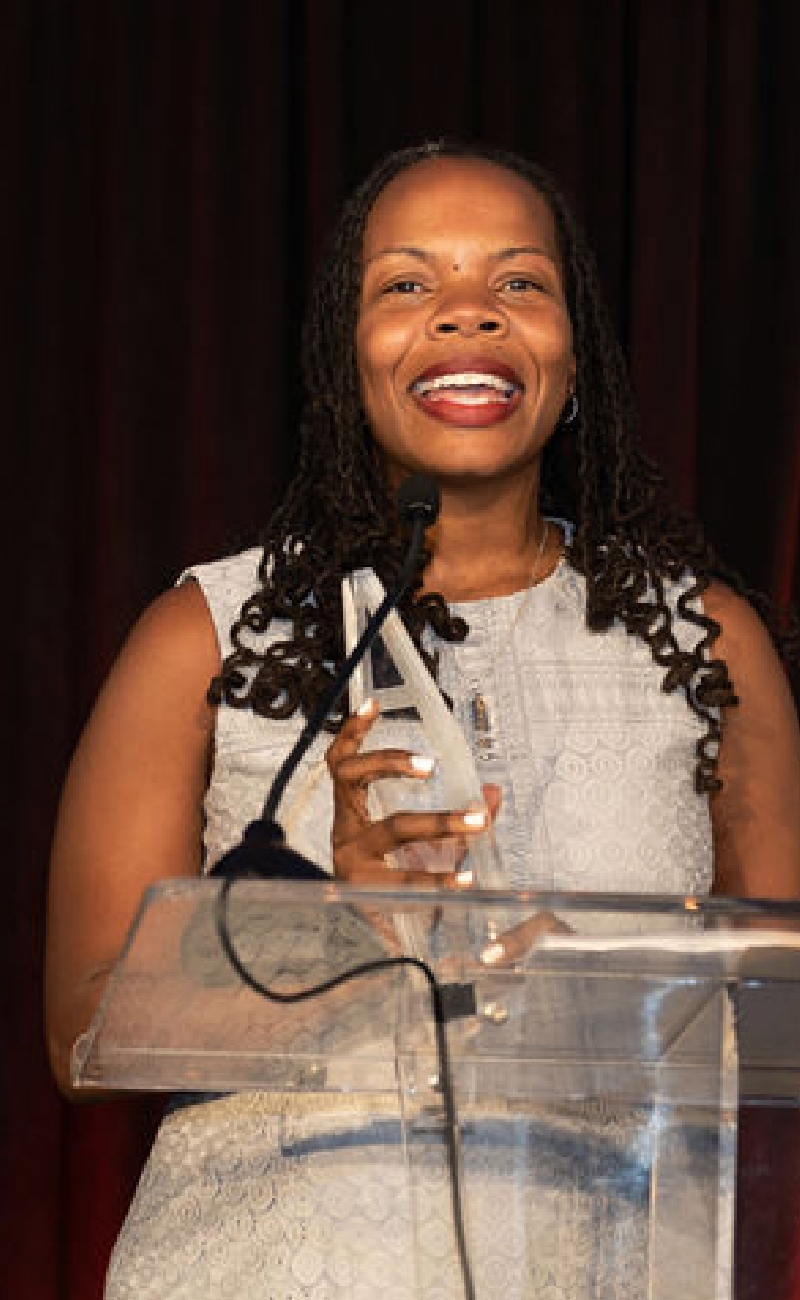
Melissa and other honorees recognized at annual AMY Awards gala
May 25th, 2022
ATLANTA – The American Marketing Association’s Atlanta chapter (AMA Atlanta) announced that Melissa Proctor, executive vice president and chief marketing officer of the Atlanta Hawks and State Farm Arena, has received the organization’s prestigious Lifetime Achievement Award for her exceptional professional achievements and contributions to the marketing industry in the city.
Melissa has held a series of senior leadership positions with the Atlanta Hawks, including responsibility for brand development and building marketing and business plans that advanced the organization’s long-term strategy. She began her career with Turner Broadcasting System, serving in brand development and strategy roles for Turner Entertainment Networks (TNT, TBS, Turner Classic Movies, truTV and Peachtree TV), Cartoon Network and Turner Media Group. She previously received the 2021 Adweek CMO Award and was named to Sports Business Journal’s 40 Under 40 list, among other honors.
Melissa accepted the Lifetime Achievement Award at the annual Atlanta Marketer of the Year Awards (AMY Awards), AMA Atlanta’s signature event that celebrates the creative people and unforgettable campaigns that have achieved outstanding results in marketing during the preceding year.
In addition to Melissa, AMA Atlanta recognized other marketing leaders in the city:
● Shannon Watkins, global CMO, Jordan Brand at Nike, was named Marketer of the Year
● Joe Koufman, founder and CEO, Setup, was named Volunteer of the Year
● Keona Jones, social strategist, Havas Atlanta, was named Rising Star
AMA Atlanta also awarded AMY Awards to agencies and organizations for their outstanding campaigns. Winners included The A Pledge, Cxmmunity, Digital Additive, Emory Healthcare, FCB Chicago, Fire Bee, Havas Atlanta, Modo Modo Agency, Nebo, Pearl Agency, SCS, Tantrum Agency, The Coca-Cola Company, The Wilbert Group and YAH Agency.
About American Marketing Association’s Atlanta Chapter (AMA Atlanta)
AMA Atlanta is the go-to source for marketing knowledge, events, resources and networking in metro Atlanta. Members have access to both local resources and the international reach of the entire AMA organization. Our members include professionals across the spectrum of the discipline: research, non-profit, public relations, advertising, branding, direct marketing, interactive, creative, multicultural and more. To join AMA Atlanta and/or view upcoming events, visit AMA-Atlanta.com.

Written by Ryan McSweeney, SEO Manager at Electric
Nearly every facet of marketing now lives online in one way or another. From lists of email contacts, to social media accounts, to the multitude of SaaS platforms that enable marketers to get their jobs done—it’s never been more imperative for marketers to ensure proper security protocols are in place to protect all these different digital elements. Marketing data is one of the core strategic data sets for any company. It must be kept secure.
There is a multitude of sensitive data that any marketer now encounters throughout any given day. It is essential to be mindful of cybersecurity because you are not just protecting your own data, but also that of your customers, partners, and fellow employees.
According to the Electric 2021 Cybersecurity Report, 96% of organizations have made at least some changes to their security strategy as a result of more people working from home during the pandemic. This is likely due to many employees working outside of traditional office environments. Because of this, the very device one works from has become increasingly important to secure.
We’ve compiled some tips for digital marketers to improve their cybersecurity posture and decrease the risk of a data breach at their organization.
1. Automate Screen Lock on Your Devices
We recommend automating screen lock. This involves activating a computer’s sleep mode after being idle for a specified amount of time and prompts the user to re-enter their password upon returning. This helps ensure devices are not accessible if left unattended. We recommend automating screen lock after 10 minutes of idle time.
If a marketer leaves a device unlocked for even a moment while at an airport, coffee shop, or coworking space, that leaves a bevy of sensitive information available to whomever walks past. If a nefarious individual gains access to your computer, they may be able to start posting from corporate social media accounts, swipe sensitive customer data, or perform a host of other detrimental actions.
2. Secure Your Home Network
If you’re still working from home, there are several things you can do to protect your home network from hacks and data breaches. One of the easiest things you can do to secure your home network is to change the default settings on your router–specifically the SSID (the router’s name), router password, and the password to the device’s administrator portal.
While keeping freeloading neighbors from using your wireless network is important, that’s not the only reason you should change these settings. Default router names like those that begin with the manufacturer’s name (TP-Link, Linksys, NETGEAR, etc.) can reveal what type of router you have. The default passwords for them are easily searchable online, and with them hackers can enter your home network.
3. Enable Firewalls
This might seem obvious to some but ensure that the company devices you perform your marketing activities from has a firewall enabled.
A firewall is a type of software (or hardware device) that protects devices from being attacked over the internet. They monitor inbound and outbound activity coming from your network for suspicious activity, blocking items that are considered dangerous based on a set of security rules.
Firewalls prevent unwanted applications from accessing devices by controlling connections on a per-app basis.
Keeping these tips in mind will help improve the cybersecurity of all the platforms you utilize as a marketing professional and your entire employer organization as a whole.
About Electric
Electric is reinventing how businesses manage their IT. Providing real-time IT support to 25,000 users and centralized IT management to over 400 customers, Electric offers companies a 50% reduction in IT spend and standardized security across devices, apps, and networks, whether you’re on-site or remote. To learn more, visit https://www.electric.ai.

MEDIA CONTACT:
Matt Cochran, Cookerly Public Relations
matt@cookerly.com
404.816.2037
THE ATLANTA CHAPTER OF THE AMERICAN MARKETING ASSOCIATION ESTABLISHES
DIVERSITY, EQUITY AND INCLUSION COMMITTEE
The new committee will support and amplify BIPOC voices within Atlanta marketing industry
ATLANTA, Ga. (Feb. 03, 2021) – The Atlanta Chapter of the American Marketing Association officially announces the formation of their Diversity, Equity and Inclusion (DEI) committee. The committee will focus on helping individuals and companies support diversity, equity, and inclusion in the industry, and amplifying the voices of our black, brown, and indigenous communities (BIPOC).
AMA is proud to have Roy Broderick, Jr., president and CEO of Authentique Agency, lead the committee. Authentique Agency is a full-service marketing consulting firm focused on leveraging the power of identity. “My connections to marketing and Atlanta are very strong and this role will allow me to ensure African Americans, Hispanics, Asian-American, Pacific Islanders, and Native Americans all are infused throughout our chapters programming, messaging and education,” said Broderick. “The tanning of America is happening, and Atlanta influences the culture.”
This committee was in the making under immediate past president, Kimberly Strong, the first black president in the chapter’s history. Current president Laura Thompson continued the momentum to make the committee official, and president-elect Jessica Dupee is eager to work with Roy and the committee in the near future. “Our chapter of close to 500 members includes corporate executives, college students and agency members of all backgrounds, races and industries. Establishing this committee will help us ensure we remain as diverse as the city we live in,” said Dupee.
As their first task, the committee developed a pledge in which they commit to use their platform in five distinct ways:
- Recruit and retain BIPOC representation within our board of directors, leadership teams, volunteers, and membership
- Increase BIPOC representation throughout our products and services, thought leadership, campaigns, programming, and distribution networks
- Build a pipeline of marketers that reflect the demographics of the populations we serve
- Partner with corporate, industry and community organizations that value diversity, equity, and inclusion
- Further educate ourselves as to the plight of racial injustice and will use our platform to facilitate courageous conversations that promote anti-bias and anti-racism within the Atlanta marketing community
The committee is excited to roll-out specific diversity, equity and inclusion programming throughout the year and see the impact it will have not only on AMA Atlanta, but the AMA network as a whole.
About AMA Atlanta
AMA Atlanta is the go-to source for marketing knowledge, events, resources and networking opportunities in Atlanta.
Founded in 1949, AMA Atlanta is a home for all marketers — from high school students in the DECA program and collegiate marketers to young professionals and experienced executives. Our membership represents all aspects of marketing from research, analytics and strategic planning to advertising, branding and communications.
In addition to our Board of Directors, we are guided by the expertise and experience of our executive advisory board consisting of past AMA presidents and executive level marketers from some of Atlanta’s leading organizations.